Settlement: What Braces Cannot Fix
This article is for general educational purposes only and is not engineering advice for any specific property. Reading it does not create an engineer–client relationship with VM Engineering. Foundation and structural conditions vary. Have a licensed professional engineer inspect your property before making repair, purchase, or legal decisions. Full disclaimer
Settlement is the condition that gets the least attention in a basement review and causes the most expensive mistakes. It is a footing-level problem: differential vertical movement driven by consolidation of low-strength, poorly compacted or disturbed bearing soils. It is not a lateral stability problem, and bracing a settling wall accomplishes nothing at all. Material deterioration is covered separately in Foundation Deterioration.
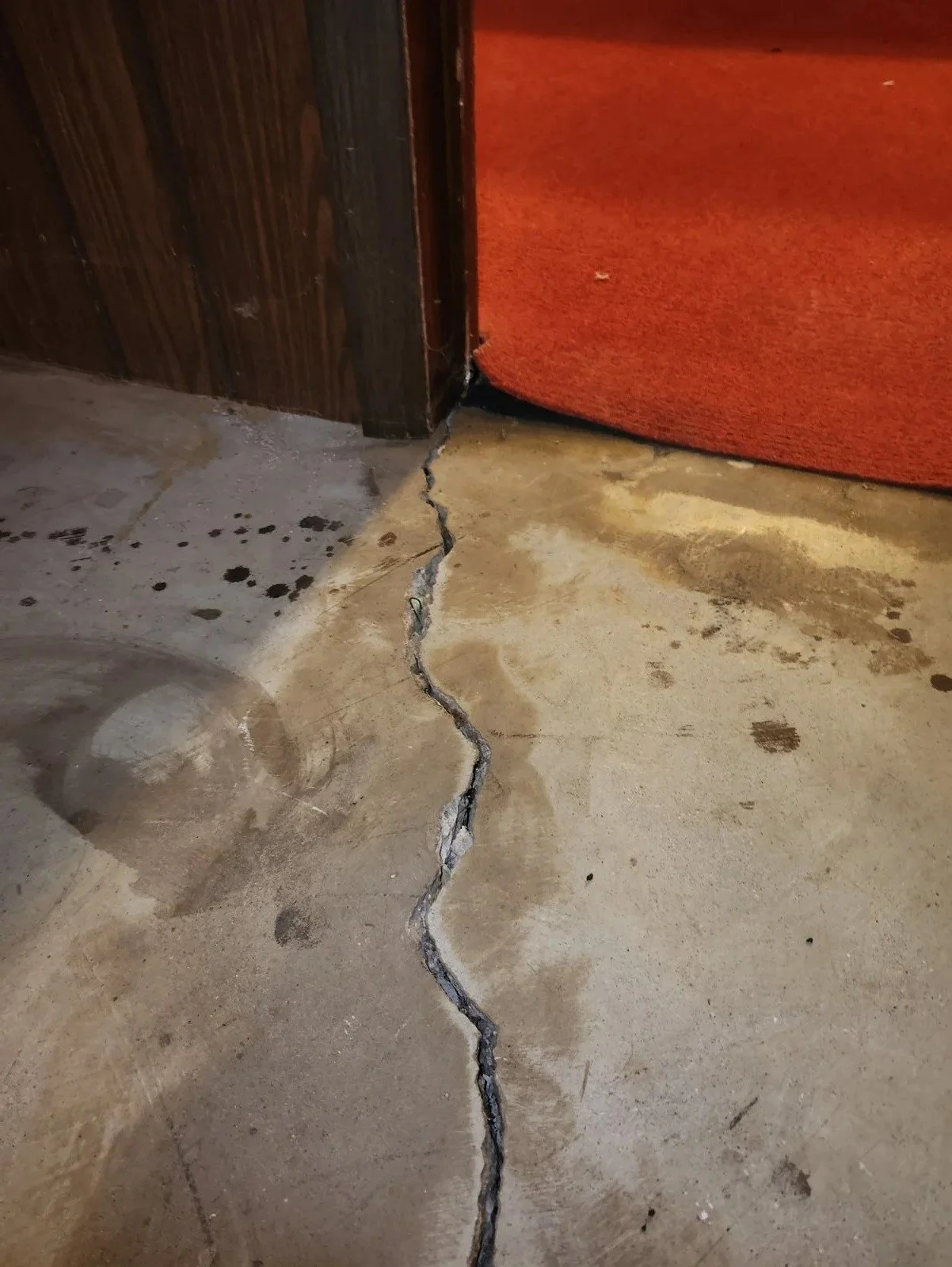
Settlement
Two Kinds, and They Look Different
One wall section, a corner, or a bump-out drops
Wide tapered cracks, joints out of level, concentrated damage. Caused by water washing out or softening soil at that spot, frost, consolidating fill, disturbed soil at an addition, or tree roots drying clay.
The whole house goes down together
Like a sinking ship — often less visible damage than local settlement. Caused by construction over organic farm fields or marsh land, or topsoil, peat and uncompacted fill under the footprint.
That second one is counterintuitive and worth saying out loud in a report: a house that settled uniformly can show less cracking than a house with one dropped corner, which is why the absence of dramatic cracking is not evidence that nothing is wrong.
Before you go inside
Soil Clues From the Curb
- Low, swale-like lots in glacial terrain, which may sit on peat or soft clay
- Proximity to lakes, marshes or wetlands, where high groundwater and soft organic soils such as peat, marl and soft clay are common
- Newer subdivisions on filled ground; a house next to a pond or drainageway
- Additions, garages and porches on separate, shallower footings pulling away
- A downspout that has been dumping at the settled corner for 40 years
- Big trees close to the wall in a dry year
The better the soil is for growing things, the worse it is for building.
In the basement
Signs of Settlement
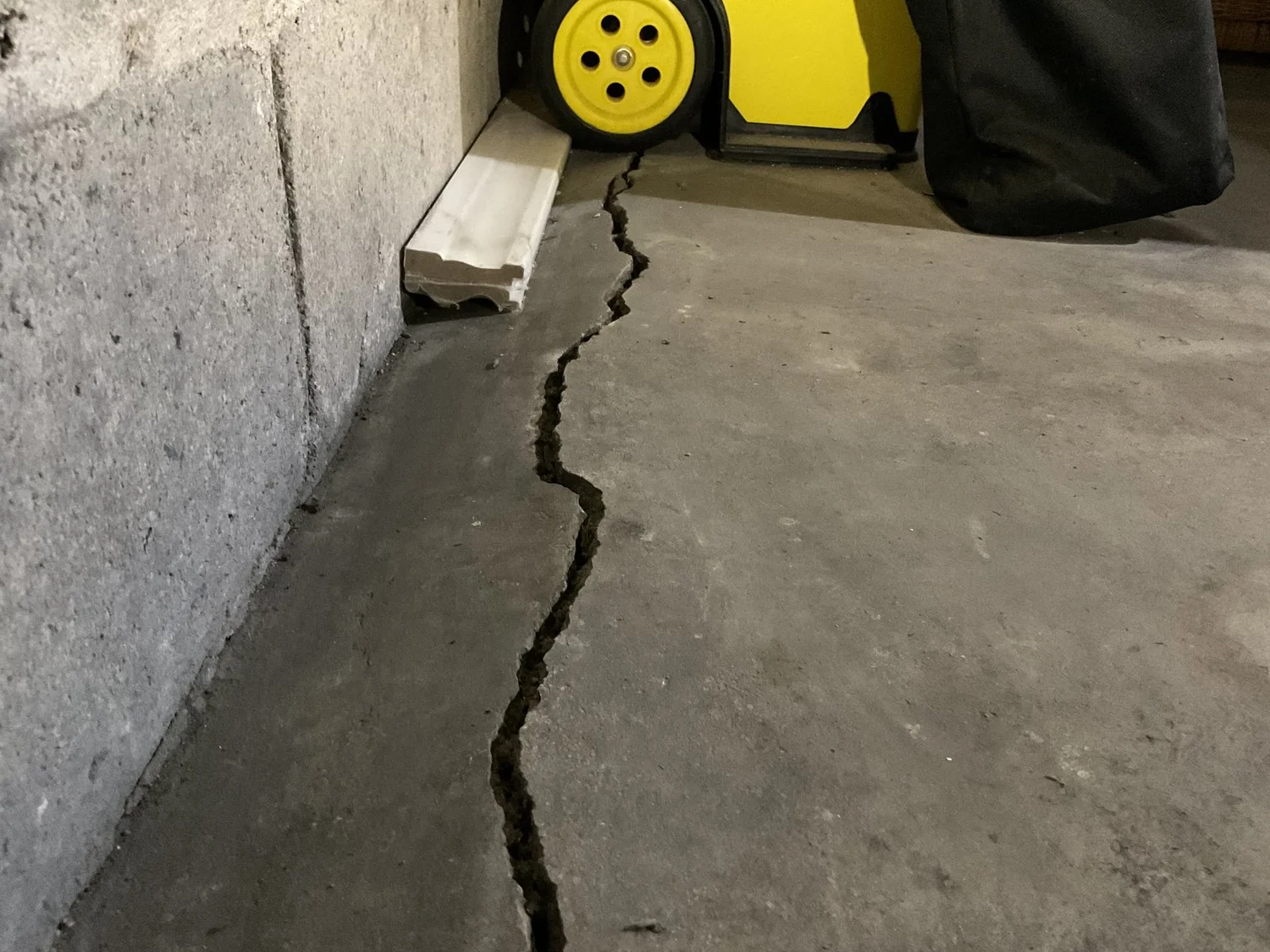
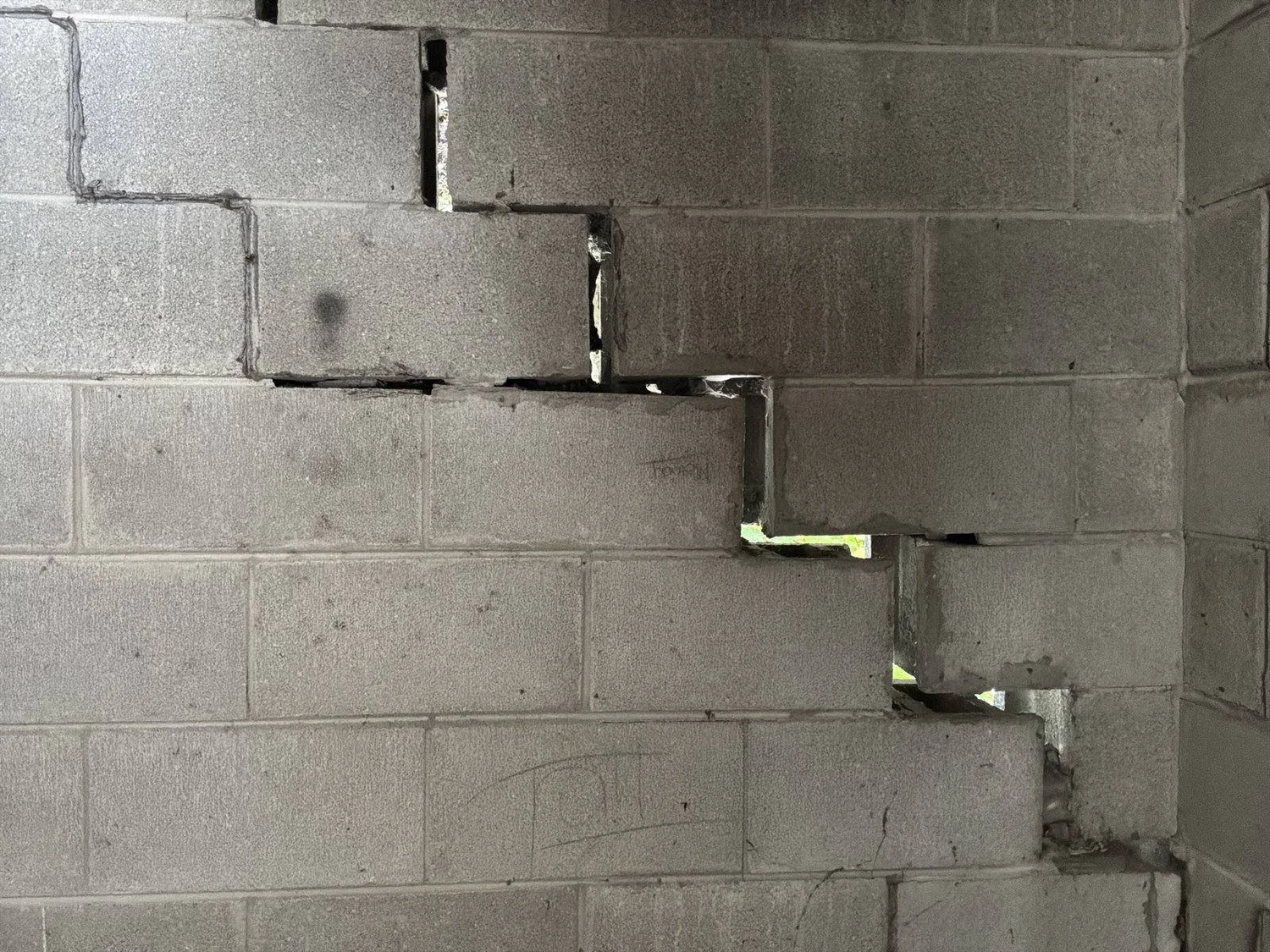
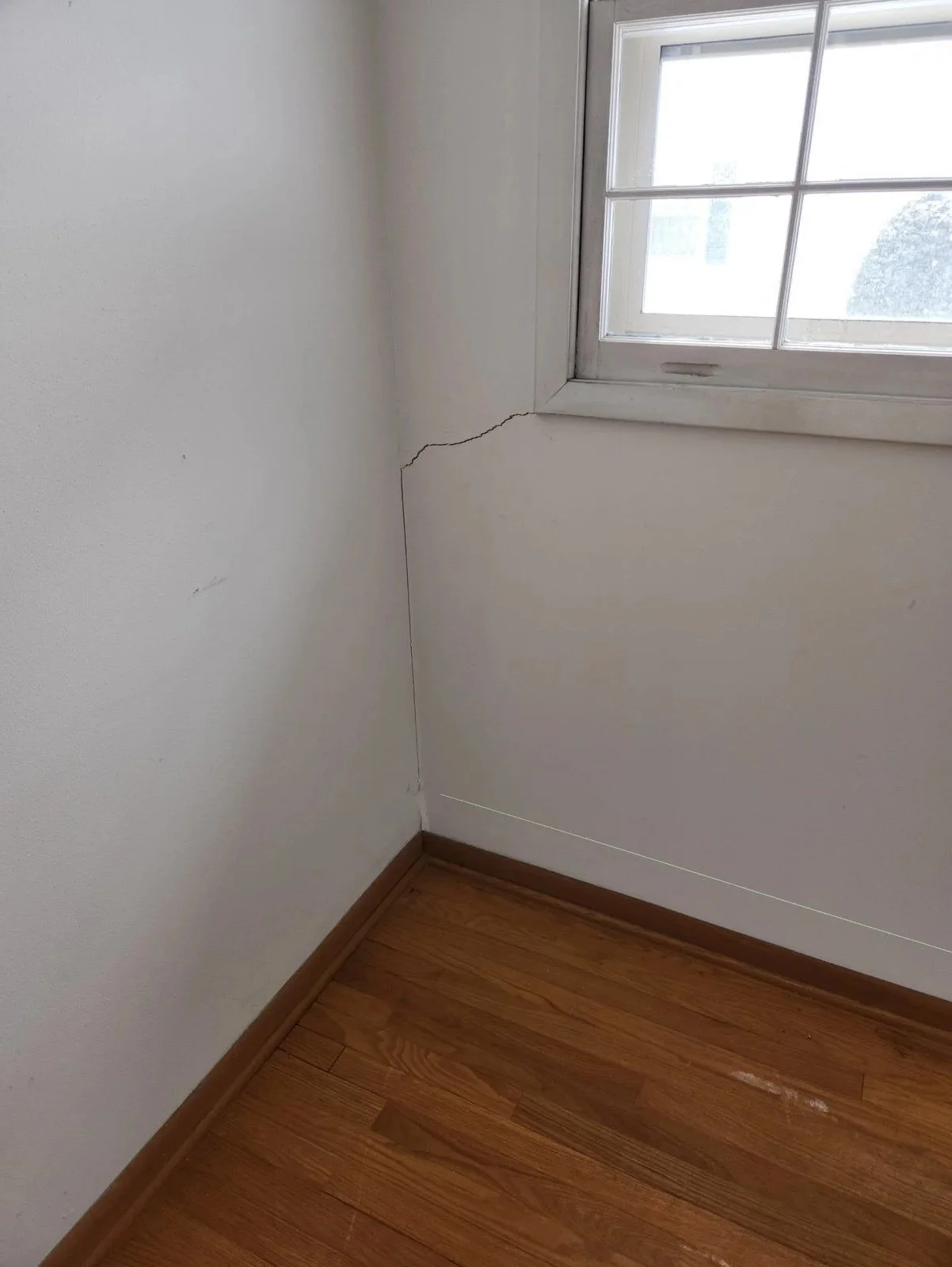
- Cracks that taper — wide at the top, narrow at the bottom, or the reverse at a rotated footing
- Cracks much wider than bowing would explain; over ¼ in.
- Horizontal joints out of level — sight along them, or use the laser
- Slab cracked parallel to the wall, dropped or hinged
- Cracks that continue through the corner onto the next wall
- Upstairs: doors and windows binding, sloped floors, drywall cracks at corners
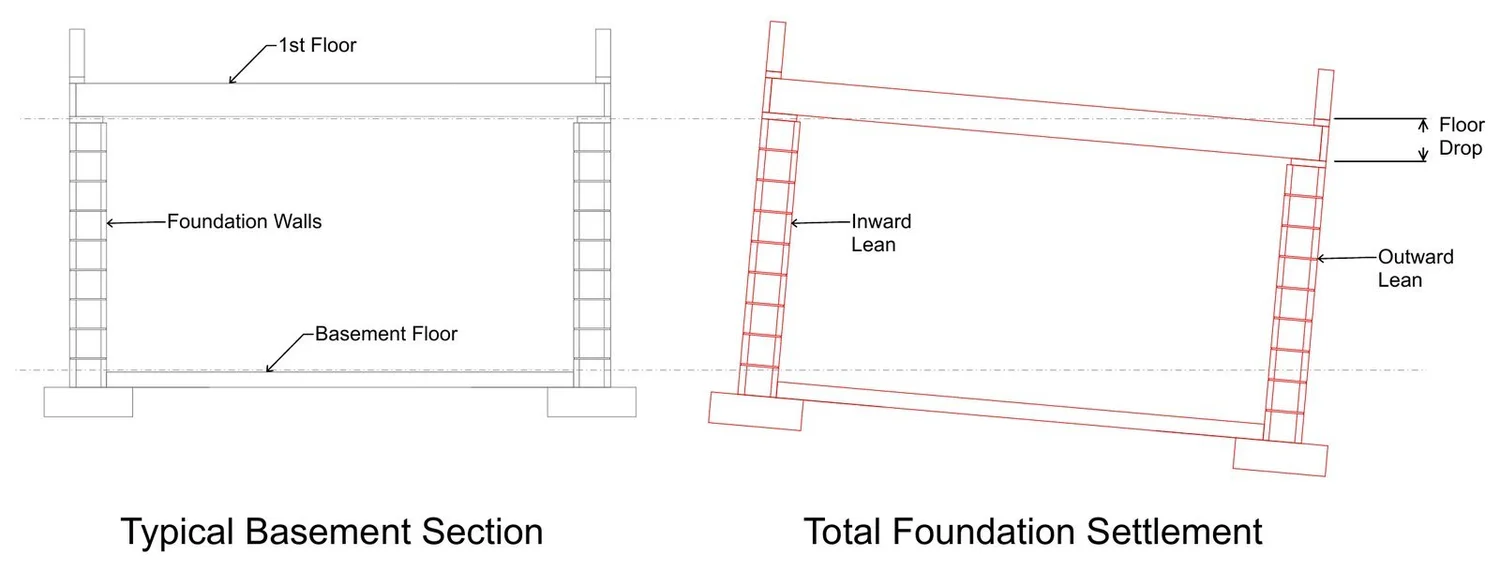
- Floor out of level toward one side
- One wall measures IN and the opposite wall measures OUT
- Horizontal joints out of level
- Doors and windows racked on the low side
Measure every exposed wall, including the ones with no cracks. A wall tipping out is missed constantly, and it is the tell that separates total settlement from a single bowing wall.
The common misdiagnosis
Settlement That Looks Like Shear
This is the most widely misdiagnosed condition in a basement. A wall shows a horizontal offset at the second course and everybody reads base shear. Sight along it: if the bottom courses have rotated out with the footing and the upper wall is plumb, the footing moved. Braces will not touch it.
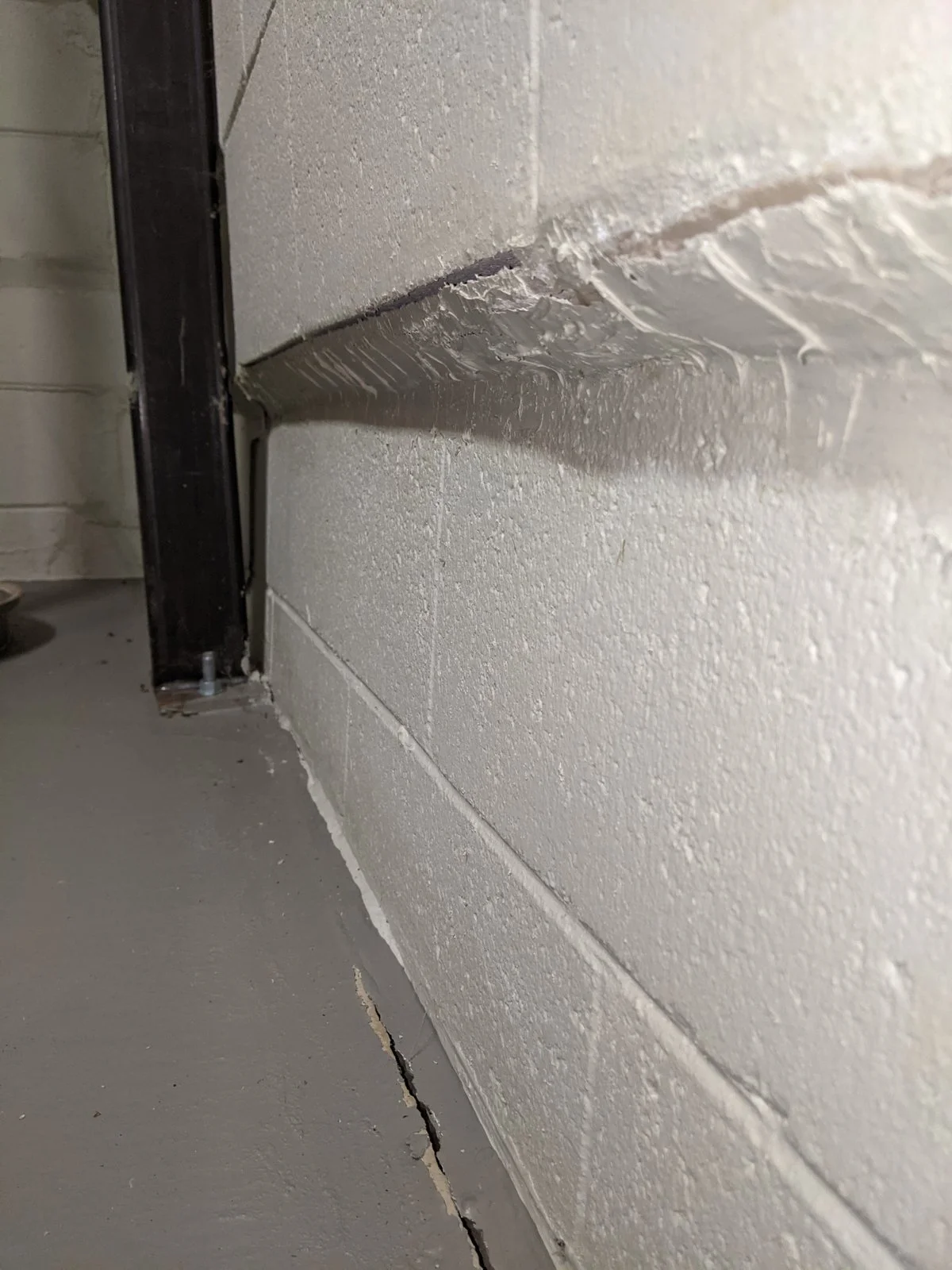
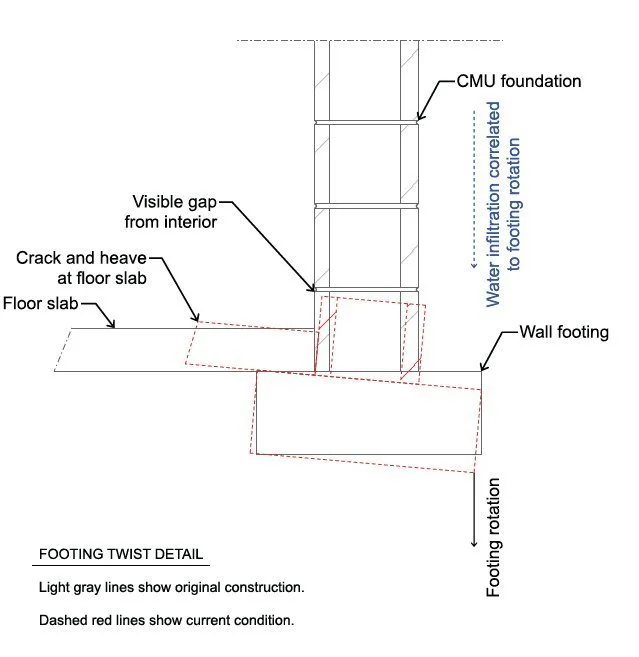
- Shear: bottom course plumb, upper wall in
- Rotated footing: bottom courses lean out, upper wall plumb
- A slab crack parallel to the wall means the footing moved
- Joints out of level mean the footing moved
- Braces on it already? Movement continuing? Say so.
Confirm it
Settlement Shows Outside and Upstairs
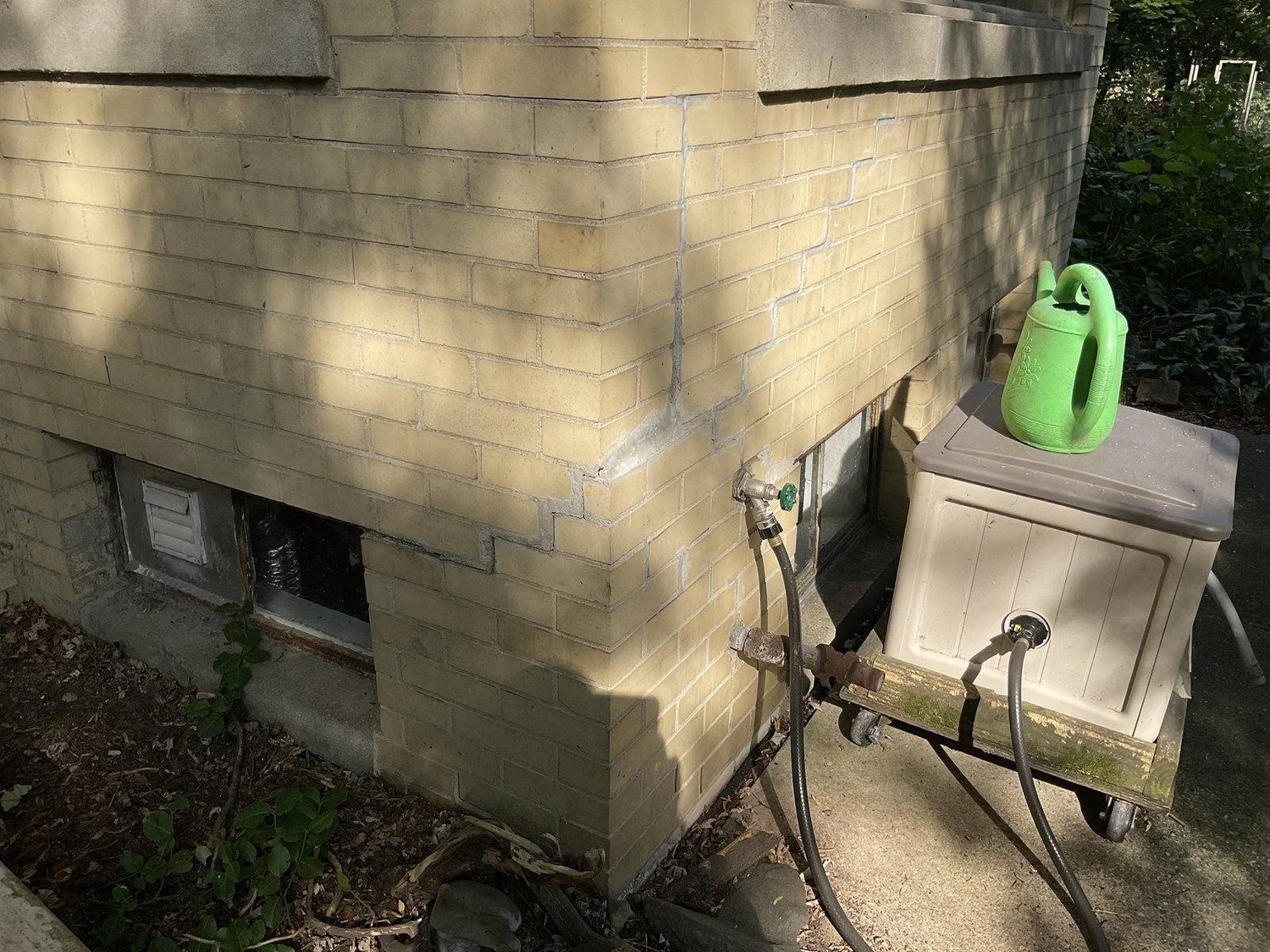
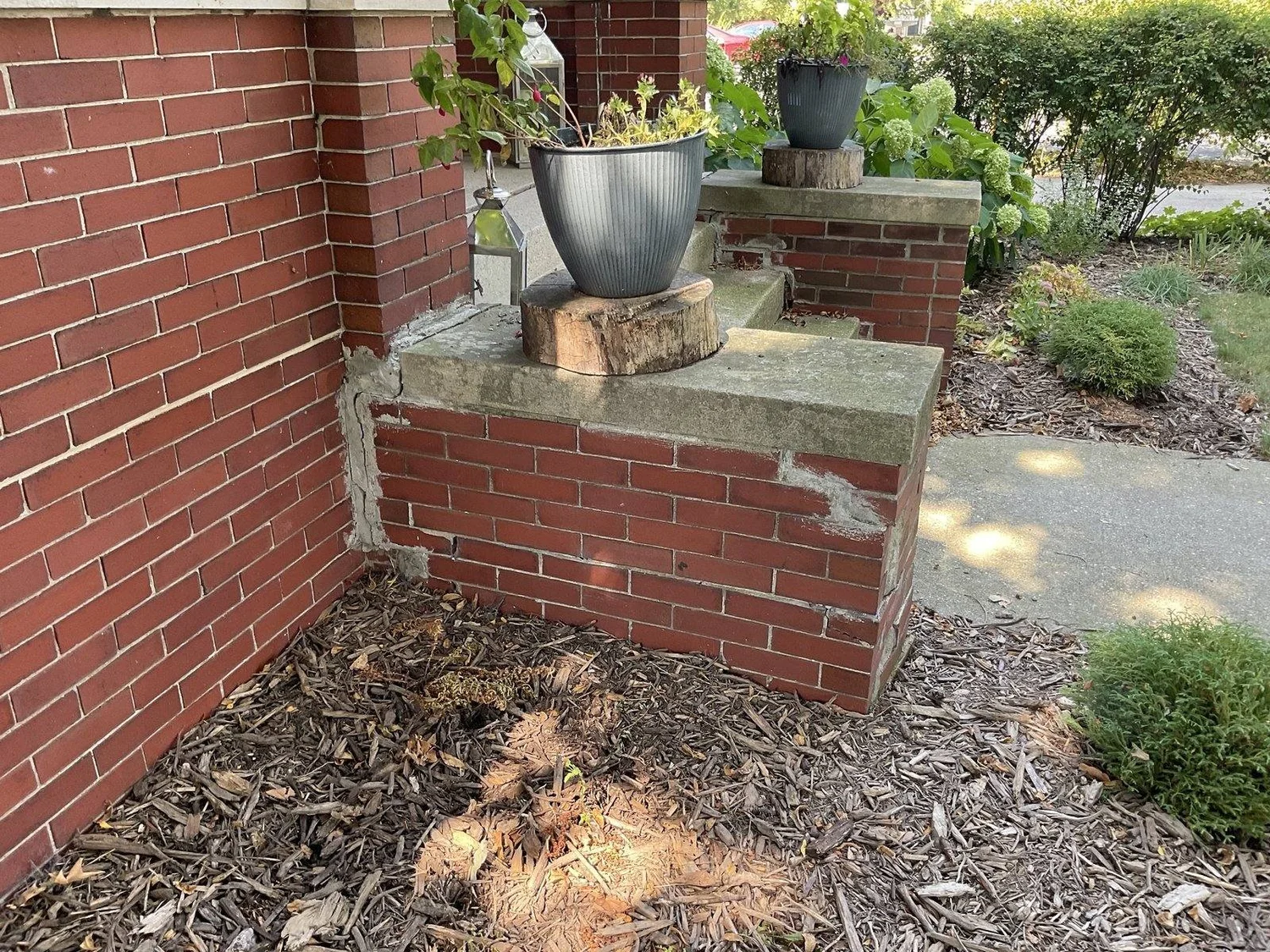
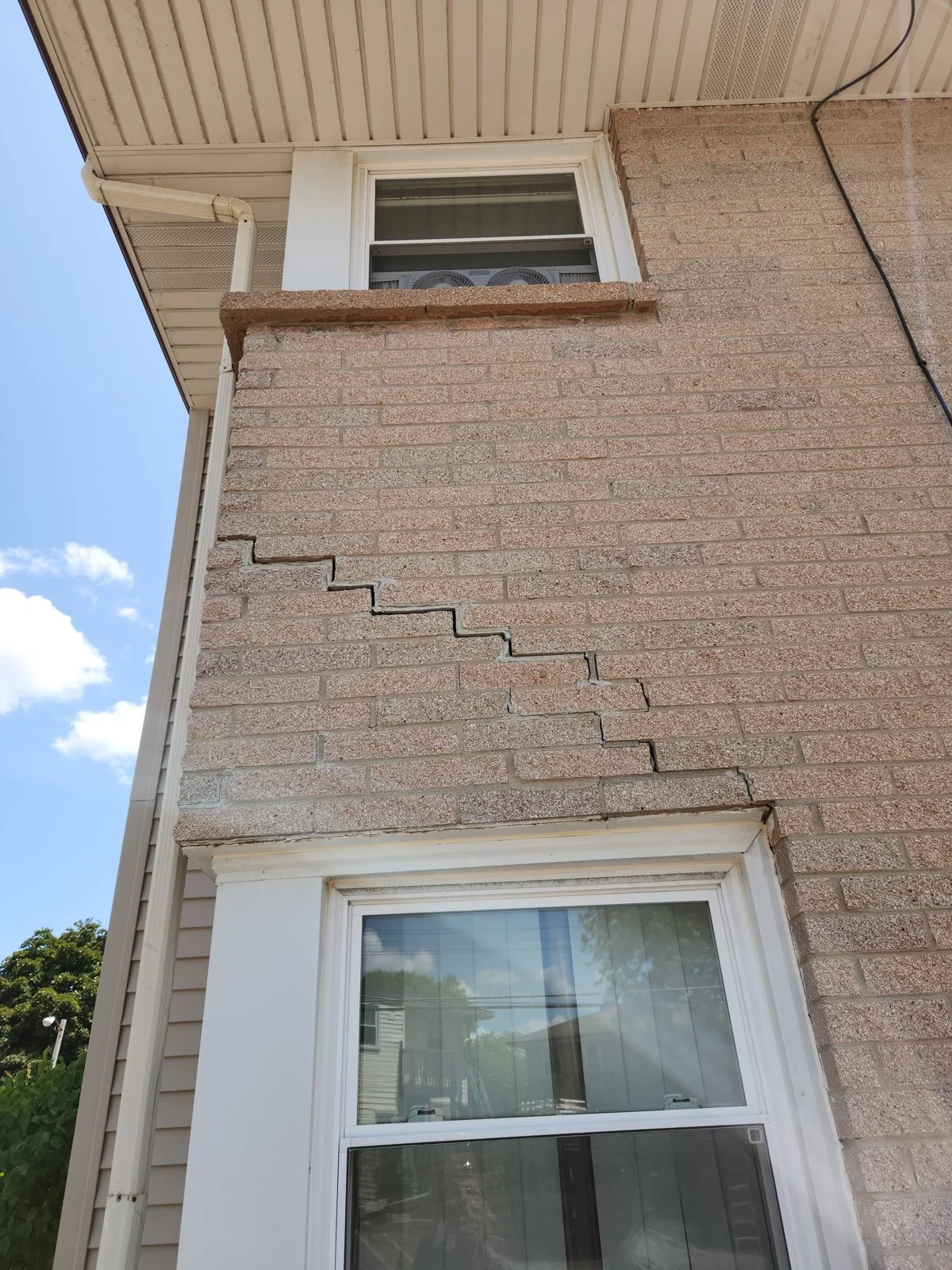
- Step cracks in veneer that widen toward the top of the wall
- Chimney, attached garage, porch or stoop pulling away from the house
- Sill plate and rim joist out of level; gaps at the top of the foundation
- Doors trimmed or planed; latch strikes moved
- Floors sloping toward the same corner as the basement cracks
- Drywall cracks radiating from door and window corners on that side
- Reading Foundation Cracks: A Field Cheat Sheet
- Basement Moisture: Three Entry Zones
- Lateral Wall Movement: Bowing, Tipping and Shearing
- Settlement: What Braces Cannot Fix — you are here
- Foundation Deterioration: Brick, Stone and the Walls You Cannot See
- Measuring, Documenting and Reporting What You Found
Settlement is a footing and soil problem. It cannot be diagnosed from a single crack, and it cannot be repaired with braces, wall anchors or crack injection. Tapered cracks, out-of-level mortar joints, pitched slab cracks running parallel to the wall, and bottom courses rotated outward all point below the wall, to the footing and the bearing soil.
Confirming settlement takes elevation readings, displacement measurements on every wall, and an evaluation of soil and site conditions. When you see these signs, refer the client to a licensed professional engineer before any contractor is hired. The engineer determines whether movement is ongoing, whether underpinning or piering is warranted, and what the repair has to accomplish. When the repair comes first and the diagnosis comes later, the homeowner usually pays twice.
VM Engineering LTD. We provide the plan. We do not do the repair. Contact us.
References: WI UBC Chapter VI, 30.50 Foundation Repair & Damp Proofing (WAFRP Best Management Standards) · R. L. Handy, The Day the House Fell, ASCE Press.