Foundation Deterioration: Brick, Stone and the Walls You Cannot See
This article is for general educational purposes only and is not engineering advice for any specific property. Reading it does not create an engineer–client relationship with VM Engineering. Foundation and structural conditions vary. Have a licensed professional engineer inspect your property before making repair, purchase, or legal decisions. Full disclaimer
Deterioration is not necessarily a mechanical instability. It is a loss of material capacity: a reduction in the compressive strength, density and effective cross-section of the masonry units, mortar or concrete as freeze-thaw cycling, sustained moisture and salt migration break the material down. The wall is not just moving; it is losing the material it needs to carry load, and no brace puts that material back. Footing movement is covered separately in Settlement: What Braces Cannot Fix.
Deterioration
Brick Foundation Walls
Start with the material itself. On a brick foundation the first question is whether the face you are looking at is even the structural wythe — parging and paint hide a great deal.
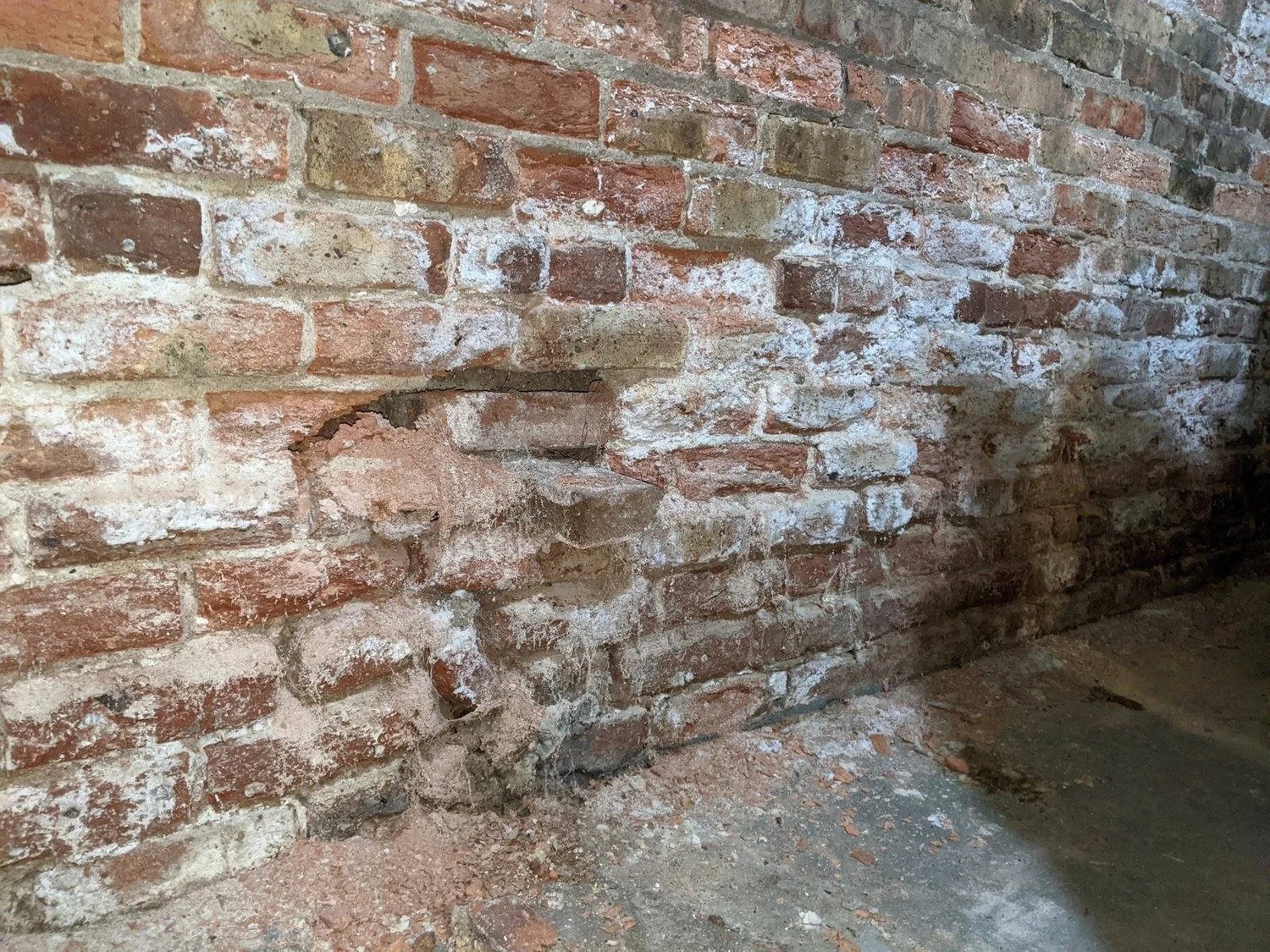
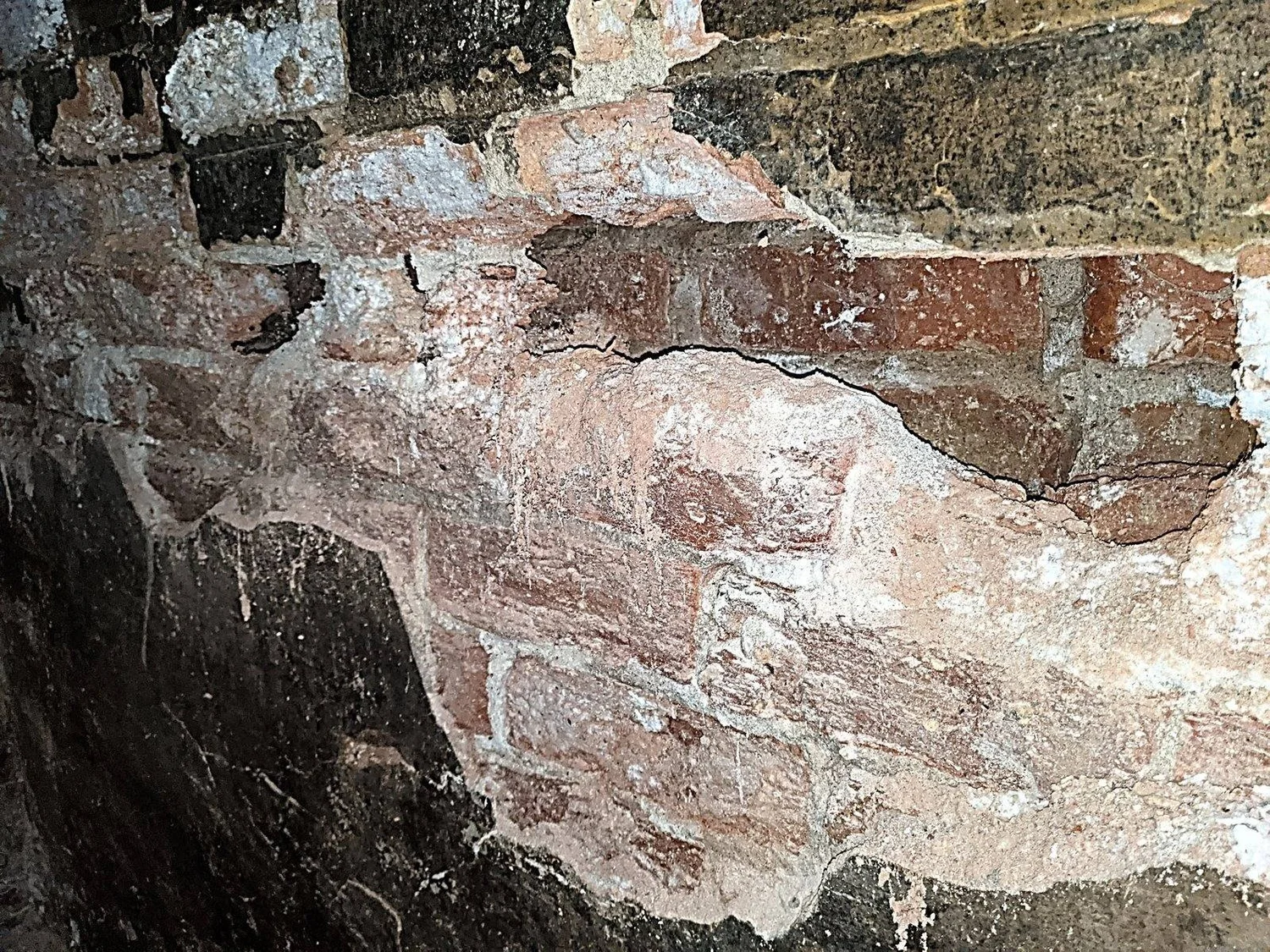
- Soft, spalling, or crumbling brick — press with a screwdriver handle
- Mortar washed out; joints recessed more than the brick face
- Parging or paint hiding the brick — and where it has fallen, what is behind it
- Exposed inner wythe; loose or missing bricks
- Bulge or lean — and whether you measured to brick or to parging
- Seepage at the floor line; efflorescence blooming from the joints
Deterioration
Stone Walls, and the Walls You Cannot See
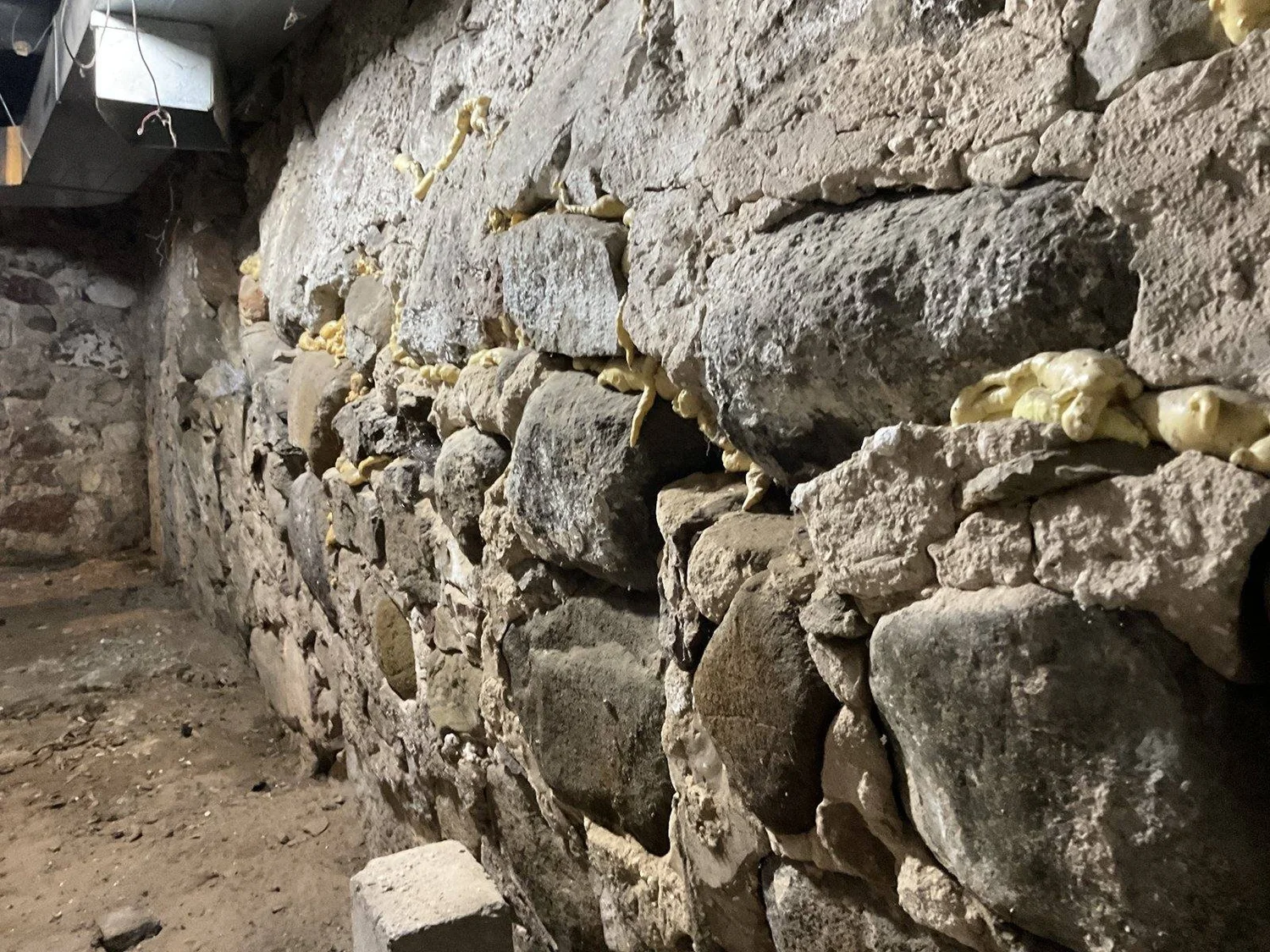
- Mortar washed out between the stones; sand on the floor at the base
- Loose, displaced, or missing stones; daylight or soil visible
- Bulging sections; parging cracked in a bulge pattern
- Any structural repair of stone is engineered under the standard — say so
Covered walls
You cannot inspect what is behind the paneling, and the report should say that in plain words rather than going silent on it.
- Look at the bottom of paneling and drywall for staining and delamination
- Check the unfinished side: utility room, under the stairs
- Note the limitation plainly: “foundation walls concealed by finishes; not inspected”
- Reading Foundation Cracks: A Field Cheat Sheet
- Basement Moisture: Three Entry Zones
- Lateral Wall Movement: Bowing, Tipping and Shearing
- Settlement: What Braces Cannot Fix
- Foundation Deterioration: Brick, Stone and the Walls You Cannot See — you are here
- Measuring, Documenting and Reporting What You Found
Brick and stone deterioration warrants a mason, foundation contractor, consultant, or licensed engineer, and any structural repair of stone is engineered work under the standard. Where material loss has reduced the bearing section of the wall, or where deterioration and wall movement show up together, refer the client to a licensed professional engineer before repairs begin.
VM Engineering LTD. We provide the plan. We do not do the repair. Contact us.
References: WI UBC Chapter VI, 30.50 Foundation Repair & Damp Proofing (WAFRP Best Management Standards) · R. L. Handy, The Day the House Fell, ASCE Press.