When to Call an Engineer About a Foundation
This article is for general educational purposes only and is not engineering advice for any specific property. Reading it does not create an engineer–client relationship with VM Engineering. Foundation and structural conditions vary. Have a licensed professional engineer inspect your property before making repair, purchase, or legal decisions. This is not legal or real estate advice. Questions about disclosure, contracts, or contingencies belong with your broker or a real estate attorney. Full disclaimer
Most foundation questions in a sale start with one line in the inspection report: “further evaluation recommended.” Who does that evaluation matters. Here is when to bring in a licensed engineer, and why it is often the fastest way to keep a deal together.
The short answer
Five Reasons to Call an Engineer
An unbiased opinion
An engineer who does not sell repairs has no reason to make the problem bigger or smaller. The report says what the wall is doing and what it needs.
Insurance and liability
A licensed PE signs and stamps the report, answers to the state licensing board, and carries professional liability insurance. Buyers, sellers and lenders can rely on it.
Site-specific design
When a wall falls outside the standard repair tables, the repair has to be designed for that wall. That is engineering work.
Permits
Many southeast Wisconsin municipalities follow the Wisconsin UBC foundation repair chapter. Some repairs need an engineering report with the permit application.
A fifth reason comes up in almost every contested sale: a tiebreaker. When the buyer’s contractor and the seller’s contractor disagree, a third-party engineer who is not bidding the job settles the question.
What the code says
When an Engineer Is Required
The Wisconsin UBC foundation repair chapter (30.50, the WAFRP Best Management Standards) lists standard repairs a contractor can install without a design. Outside those, it calls for site-specific engineering, and the engineering report goes in with the permit application.
- Any wall repair where conditions do not fit the code’s standards
- Walls taller than 8 ft 2 in.
- Brick walls with 1 in. or more of movement that need straightening
- Structural repair of a stone foundation, other than replacing it
- Methods outside the standard — carbon fiber, grade beams, core filling, or anything not listed
- Settlement — piers, piles and caissons are engineered solutions
On a showing
Red Flags That Point to an Engineer
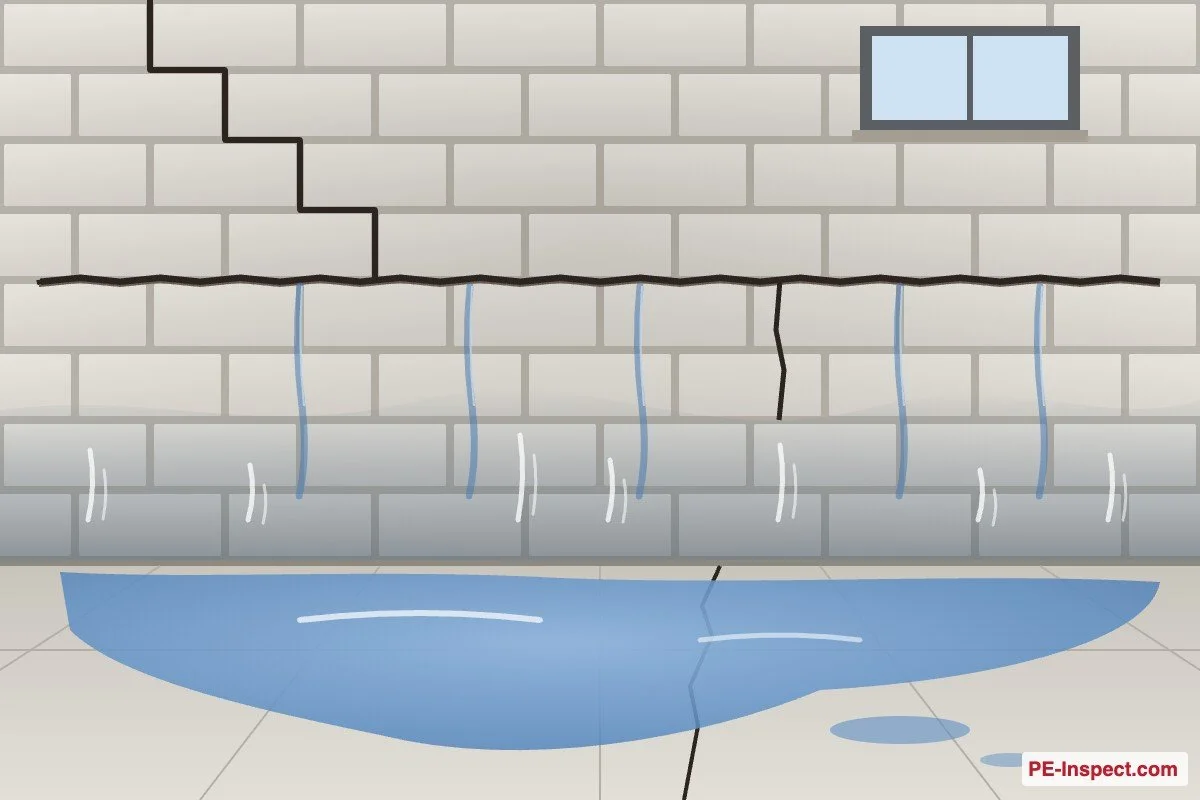
- A horizontal crack in a block wall, or a wall that bows inward
- Cracks wider at one end than the other, over ¼ in.
- Bottom courses of block slid inward past the rest of the wall
- Sloping floors, sticking doors, cracks above windows
- Existing braces or carbon straps with no permit or engineering paperwork
- A wall that is wet and cracked in the same area
- An inspection report that names a structural engineer
Who does what
Contractor or Engineer?
Both have a place. The order matters.
| Repair contractor | Engineer | |
|---|---|---|
| Sells the repair | Yes | No |
| What you get | A proposal and price for their system | A stamped report: the condition, the cause, and the repair scope |
| Best for | Pricing a repair once the scope is set | Deciding what the scope should be |
Scroll the table sideways on a phone
Get the engineer’s scope first, then collect bids to it. Every contractor prices the same work, so the numbers can be compared — and the buyer and seller are negotiating over one repair, not three different ones.
Prior repairs
Ask for the Paperwork
Braces, straps or new drain tile in a listing are a good sign only if they are documented. Ask the seller for the permit, the engineering report if one was required, and any transferable warranty. A repair with no paper behind it will get questioned at inspection.
- When to Call an Engineer About a Foundation — you are here
- Pre-Listing Foundation Assessment: Get Ahead of the Inspection
- What Is a Drain Tile Test? The Whole System, Explained
If the question is “how much to fix it,” call a contractor. If the question is “what is wrong, and what does it actually need,” call an engineer first. An independent, stamped answer early in the process is cheaper than a renegotiation late in it.
VM Engineering LTD. We provide the plan. We do not do the repair. Contact us.
References: WI UBC Chapter VI, 30.50 Foundation Repair & Damp Proofing (WAFRP Best Management Standards), sections 30.50(1) and 30.50(5).