Pre-Listing Foundation Assessment: Get Ahead of the Inspection
This article is for general educational purposes only and is not engineering advice for any specific property. Reading it does not create an engineer–client relationship with VM Engineering. Foundation and structural conditions vary. Have a licensed professional engineer inspect your property before making repair, purchase, or legal decisions. This is not legal or real estate advice. Questions about disclosure, contracts, or contingencies belong with your broker or a real estate attorney. Full disclaimer
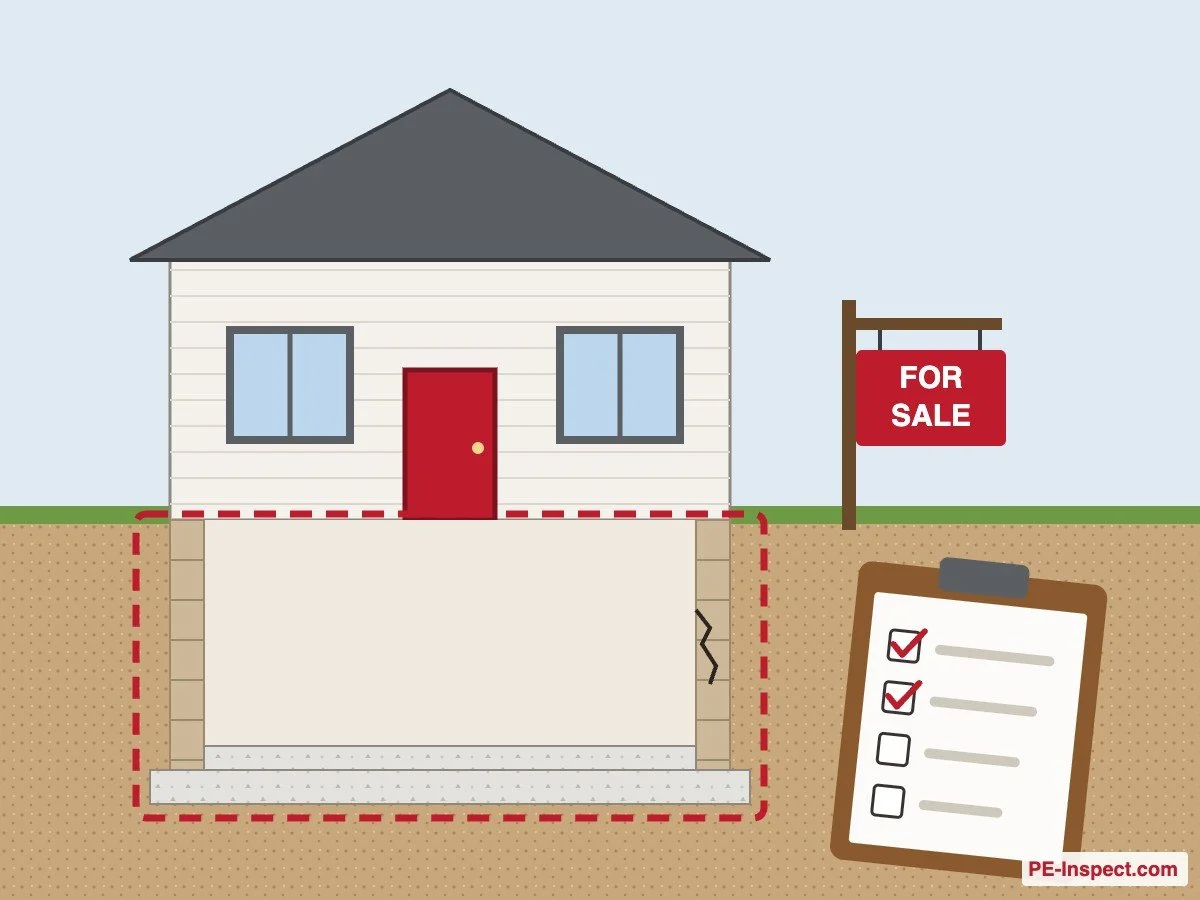
The worst time to learn about a foundation problem is day eight of a ten-day inspection window. A pre-listing assessment moves that surprise to before the house hits the market, while the seller still controls the timeline.
Why do it
What the Seller Gains
Real bids, not rush bids
Weeks to collect quotes to one scope, instead of days under a contingency deadline.
Fix, credit, or price it in
The seller decides how to handle it before a buyer’s inspector frames the conversation.
A report buyers can read
A stamped report with measurements and a repair scope answers questions before they are asked.
Fewer renegotiations
A known, documented condition is easier to price than an unknown one.
Once the seller knows about a defect, it belongs on the Real Estate Condition Report. A pre-listing report makes a condition known. Talk it through with your broker before ordering one. A documented condition with a plan behind it is usually easier to sell than one the buyer discovers.
Walk-through
What to Look For Before You List
Outside
- Downspouts discharge well away from the house, not at the wall
- Soil slopes away — the code target is ½ in. per foot for 10 ft
- Patios, walks and driveways do not pitch toward the house
- Window wells are clear, drained and not holding water
- Stair-step cracks in brick or siding above the foundation
Inside
- Water stains, white mineral salt (efflorescence) or a musty smell
- Horizontal cracks, stepped cracks, or cracks wider at one end
- A wall that bows inward, or block that has slid at the bottom
- Braces or straps — and whether there is paperwork
- Fresh paint or new paneling on foundation walls
- Sump pump running constantly, or a crock that is always dry
Fresh paint and new paneling are not problems by themselves. They are a reason to look closer, because a buyer’s inspector will.
Drain tile
Get Ahead of the Drain Tile Test
Buyers in southeast Wisconsin often write a drain tile test into the offer. A seller can prepare for it:
- Extend downspouts and fix grading. It is the cheapest repair on this page and the first one the code lists for wet walls.
- Confirm the sump pump runs and discharges away from the house.
- Consider a seller-ordered test from an independent tester, and share the written results.
- If a wall is also cracked or bowing, get the structural answer before pricing drain tile. Water and movement are often one problem.
The last post in this series explains what the test checks and how to read the results.
Planning ahead
Common Findings and Typical Repairs
| What was found | Typical repair | Engineer needed? |
|---|---|---|
| Staining low on the wall or at the floor | Downspouts and grading; drain tile repair if the test shows blockage | Usually not |
| Seepage higher on the wall | Grading, drain tile replacement, wall drainage board | Usually not — test first |
| Bowing under 1 in., recent movement | Steel wall braces per the code’s standard tables | Not if it fits the standard |
| Movement of 1 in. or more, or ½ in. slide | Excavate, straighten and brace, or rebuild | Often; brick walls, yes |
| Tapered cracks, sloping floors | Piers or piles (settlement) | Yes |
| Crumbling brick or stone | Repoint or rebuild | Often |
Scroll the table sideways on a phone
- When to Call an Engineer About a Foundation
- Pre-Listing Foundation Assessment: Get Ahead of the Inspection — you are here
- What Is a Drain Tile Test? The Whole System, Explained
A foundation problem found before listing is a line item. The same problem found during the inspection window is leverage for the buyer. An independent, stamped assessment gives the seller the facts, the scope, and the time to decide.
VM Engineering LTD. We provide the plan. We do not do the repair. Contact us.
References: WI UBC Chapter VI, 30.50 Foundation Repair & Damp Proofing (WAFRP Best Management Standards), sections 30.50(4) through 30.50(6).