Foundation Wall Movement and Settlement: What Homeowners Should Know
This article is for general educational purposes only and is not engineering advice for any specific property. Reading it does not create an engineer–client relationship with VM Engineering. Foundation and structural conditions vary. Have a licensed professional engineer inspect your property before making repair, purchase, or legal decisions. Full disclaimer
Not every crack in a basement wall means the same thing. Most structural foundation problems come down to one of two causes: soil pushing the wall in, or the ground under the house moving down. From across the room they can look alike, but the repairs are completely different.
The big picture
Two Different Problems
Wall movement
Soil, water and frost push sideways on the wall until it moves into the basement. Most common in concrete block walls.
Settlement
The soil under the footing gives way and part of the house, or all of it, sinks. The wall moves down, not in.
Wall movement
Three Ways a Wall Moves In
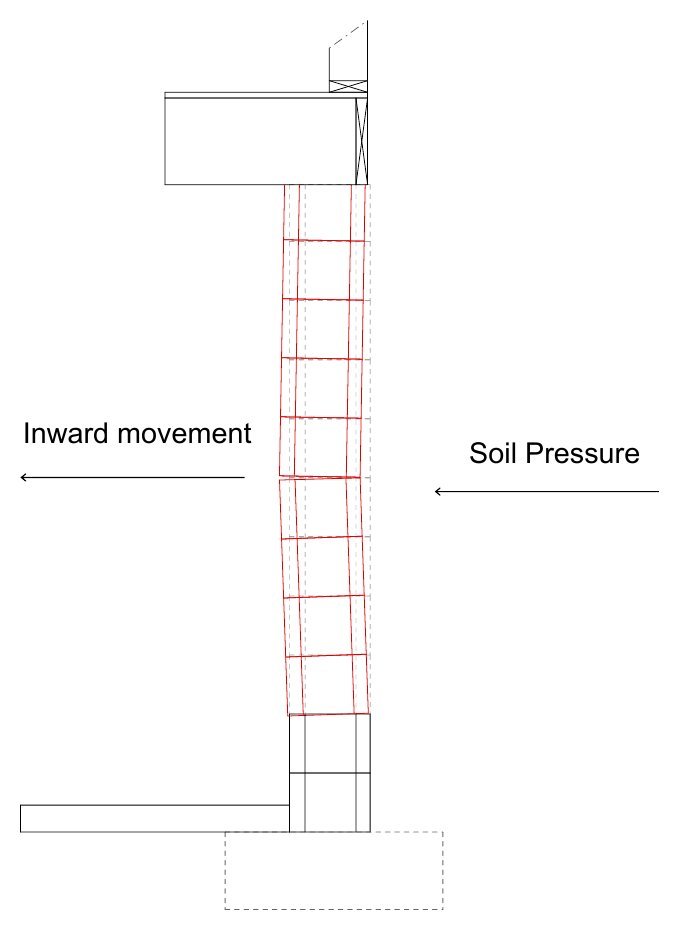
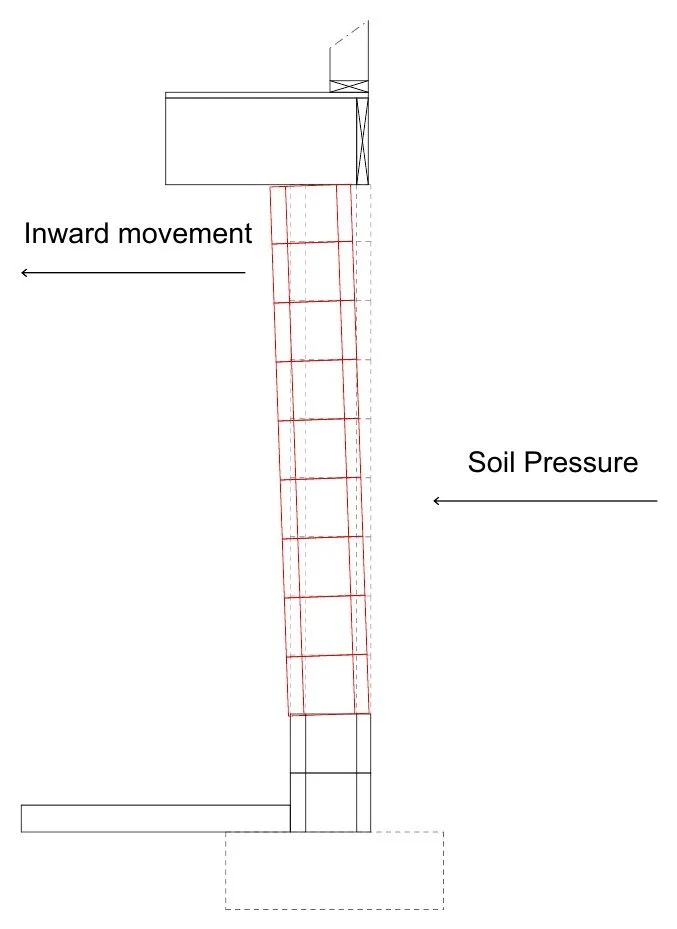
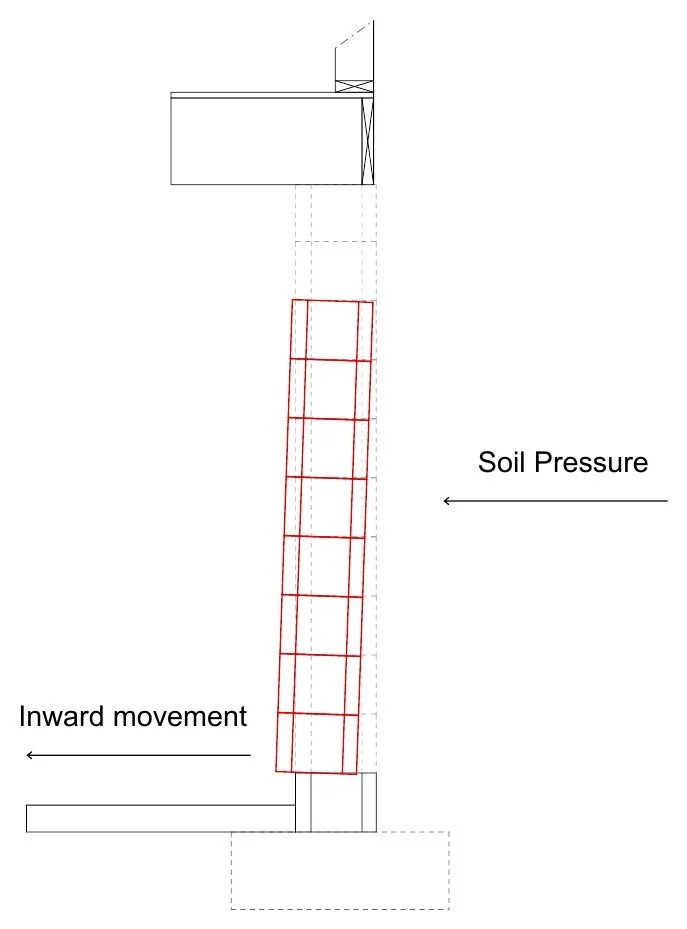
A simple way to tell them apart: ask where the wall has moved the most. The middle means bowing. The top means tipping. A step near the floor means shearing.
- A horizontal crack along a mortar joint
- Stair-step cracks running down toward the corners
- A wall that bulges or leans when you sight along it
- Cracks that came back after they were filled or tuckpointed
- Existing braces with new cracks between them
Water is usually behind it. Saturated, frozen soil pushes much harder than dry soil, which is why wet basements and bowed walls so often show up together. See How Water Gets Into a Basement.
Settlement
When the House Moves Down
Settlement happens at the footing, the concrete pad the wall sits on. When the soil below it is soft, washed out, or was never compacted, the footing drops or rotates.
Local settlement
A corner, one wall or an addition drops. Usually caused by water at that spot, a downspout, soft fill or tree roots. Cracking is concentrated and easy to see.
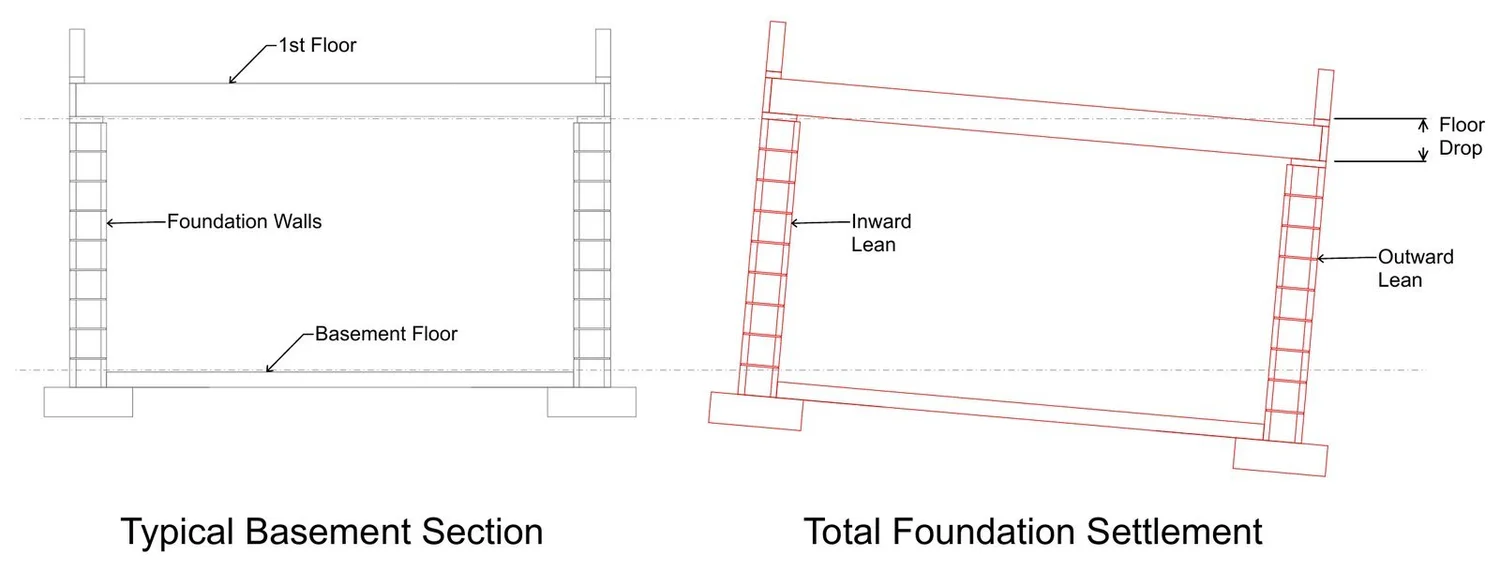
Total settlement
The whole house sinks, often on soft or organic soil. It can show less cracking than local settlement, so few cracks does not always mean no problem.
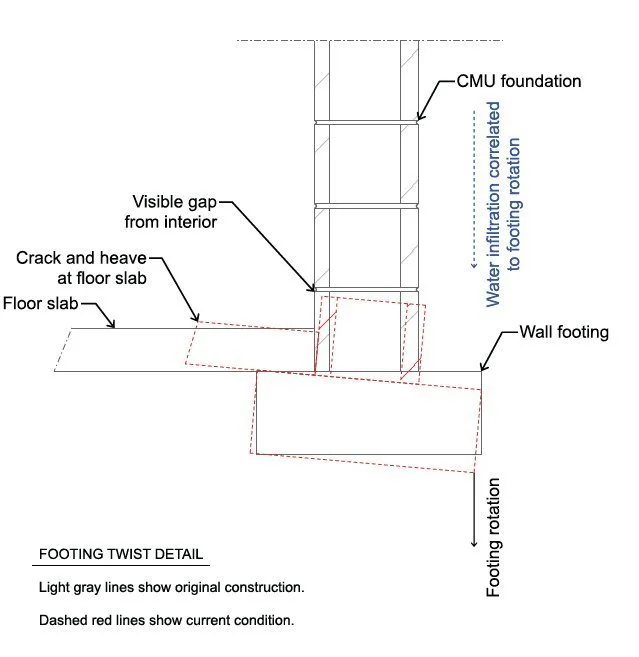
- Cracks that taper: wide at one end, narrow at the other
- Cracks wider than about ¼ in.
- Mortar joints that are no longer level
- A floor crack running along the wall, with one side higher
- Upstairs: sloping floors, sticking doors and windows, drywall cracks at corners
- Outside: step cracks in brick, or a porch or stoop pulling away
Why it matters
The Wrong Repair Fixes Nothing
Wall braces stop a wall from moving in. They do nothing for a footing that is sinking. Piers support a sinking footing. They do nothing for a wall that is bowing. Getting the diagnosis right comes before getting bids.
| What you see | What it usually means |
|---|---|
| Horizontal crack partway up the wall | Bowing |
| Wall leaning in at the top; cracks at corners and the main beam | Tipping |
| Step or lip one or two blocks above the floor | Shearing, or a rotated footing. Have it checked. |
| Crack wider at one end than the other | Settlement |
| Sloping floors, binding doors upstairs | Settlement |
| Thin vertical crack, no offset | Usually shrinkage. Watch for water and for widening. |
Scroll the table sideways on a phone
What to do
Simple Next Steps
- Fix the water outside first: extend downspouts and slope the soil away from the house.
- Mark the ends of each crack with the date, and take photos with a tape measure in the shot.
- Check again after spring thaw and after heavy rain. Cracks that grow are telling you something.
- Do not cover the walls with paint or paneling before the cause is known.
- A horizontal crack, or a wall that bows, leans or has slid
- Cracks wider than ¼ in., tapered, or getting wider
- Sloping floors or doors that stick along with wall cracks
- Braces or past repairs that have cracked again
A wall that is being pushed in and a house that is sinking need different repairs. An independent engineer can tell you which one you have and what it actually needs, before you pay for a fix.
VM Engineering LTD. We provide the plan. We do not do the repair. Contact us.
More reading: How Water Gets Into a Basement: The Drain Tile System, Explained. References: WI UBC Chapter VI, 30.50 Foundation Repair & Damp Proofing (WAFRP Best Management Standards).